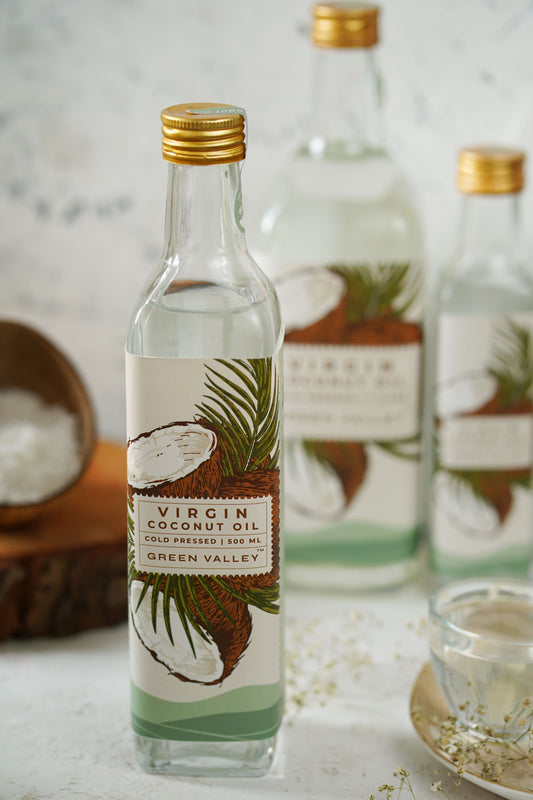

Coconut oil has long been used in Indian households for everything from cooking to hair care and skincare. Because it leaves the skin feeling soft and moisturised, you may have heard that applying coconut oil to your face can also make your skin fairer or lighter.
But does coconut oil actually change your natural skin tone?
Why can skin look brighter after applying coconut oil?
When skin is dry, its surface can appear rough, flaky, or dull. Applying an oil can help reduce water loss from the skin and make its surface feel smoother.
Virgin coconut oil works as an emollient, meaning it helps soften and moisturise the skin. This can temporarily make dry skin look more supple and give it a natural-looking glow. That glow, however, should not be confused with skin lightening. Coconut oil does not bleach the skin or fundamentally alter the amount of melanin responsible for your natural skin colour.
Can coconut oil remove tanning?
This is another common misconception.
A suntan develops when the skin produces more melanin in response to ultraviolet (UV) radiation. Applying coconut oil after tanning may moisturise dry skin, but it does not remove the melanin responsible for the tan. The tan will generally fade naturally as skin cells are renewed over time. Coconut oil aids in skin rejuvenation and repair, which may result in tanning fading away.
If your goal is to prevent tanning and pigmentation caused by sun exposure, sun protection is considerably more important than applying coconut oil. Use a broad-spectrum sunscreen, protective clothing, shade, and other sun-protection measures when appropriate.
What can coconut oil actually do for your skin?
Coconut oil may have several useful skincare properties.
1. It can moisturise dry skin - Coconut oil can help reduce moisture loss from the skin, making it useful as a moisturiser for some people with dry skin. It may be particularly useful on areas such as the arms, legs, elbows, and other parts of the body that become dry.
2. It can make skin feel softer - Because it forms a layer over the skin, coconut oil can help smooth the skin's surface and improve how dry skin feels. This can create a temporary healthy-looking sheen.
3. It contains naturally occurring compounds - Virgin coconut oil contains minor compounds such as phenolic substances. Laboratory research has investigated antioxidant and other biological properties associated with coconut-derived compounds. However, laboratory findings should not be interpreted as proof that applying coconut oil will lighten skin or treat pigmentation.
Is coconut oil suitable for every face?
Not necessarily.
Your facial skin can behave very differently from the skin on the rest of your body. Coconut oil can be comedogenic for some people, meaning it may contribute to clogged pores. People with oily or acne-prone skin may therefore find that applying coconut oil to the face makes their skin feel greasy or contributes to breakouts.
If you have acne-prone skin, consider testing a small amount first or choosing a facial moisturiser specifically formulated for your skin type. If you develop persistent irritation or breakouts, stop using it.
Does virgin coconut oil work better than refined coconut oil for skin?
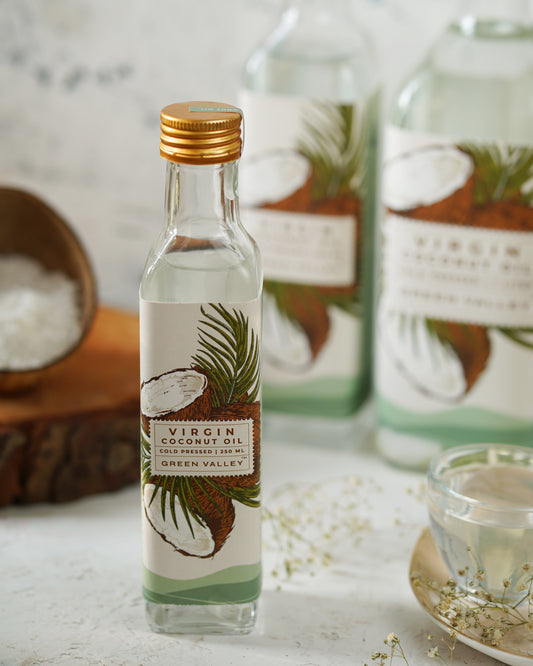
Virgin coconut oil undergoes less processing and retains more of the coconut's natural aroma and minor compounds.
For people who prefer minimally processed products, virgin coconut oil can be an appealing choice for moisturising dry skin. However, virgin coconut oil should not be considered a skin-lightening treatment. Its main practical skincare benefit is moisturisation rather than changing pigmentation.
Can coconut oil replace sunscreen?
No.
This is particularly important. Coconut oil does not provide reliable, broad-spectrum protection against UVA and UVB radiation and should not be used as a substitute for sunscreen. If you're concerned about tanning, uneven pigmentation, premature skin ageing, or sun damage, appropriate sun protection is much more important.
Coconut oil can moisturise your skin, but it cannot take the place of a properly formulated sunscreen.
How to use coconut oil on your face
If coconut oil works well for your skin, you can try using a small amount as a moisturiser.
A simple approach is:
- Cleanse your face gently.
- Pat the skin dry.
- Take a very small amount of virgin coconut oil.
- Warm it between your fingertips.
- Apply a thin layer to dry areas.
- Avoid getting it into your eyes.
It's best to use a small quantity rather than coating your face heavily. If you have sensitive or acne-prone skin, test it on a small area before applying it more broadly.
Final thoughts
Coconut oil can be a useful natural moisturiser, particularly for dry skin, but it cannot change your natural skin colour or make you permanently fairer. Healthy-looking skin is less about becoming lighter and more about keeping the skin moisturised, protected from excessive sun exposure, and cared for according to its individual needs.
If you enjoy using coconut oil on your skin, virgin coconut oil can be a simple addition to your skincare routine. Just don't expect it to change the colour you were born with. Skin can be healthy, hydrated, and glowing at every shade.