
Vinegar is one of those quiet kitchen ingredients that does a surprising amount of work. It adds acidity to curries, balances sweetness, brightens salads, helps with pickling, and can transform a simple marinade.
But not all vinegar is made in the same way.
You may have come across terms such as natural vinegar, brewed vinegar, fermented vinegar, synthetic vinegar, and coconut vinegar. What do these terms actually mean, and is synthetic vinegar safe to use in everyday cooking?
The answer starts with how the vinegar is produced.
What is vinegar?
At its simplest, vinegar is an acidic food product in which acetic acid provides the characteristic sour taste.
Traditional brewed vinegar is produced through fermentation. A suitable source of sugars is first converted into alcohol and then undergoes acetic acid fermentation. Depending on the raw material, this can include fruits, coconut water, malt, molasses, jaggery, or sugarcane juice. FSSAI defines brewed vinegar in these terms and requires it to meet specified acidity and quality standards.
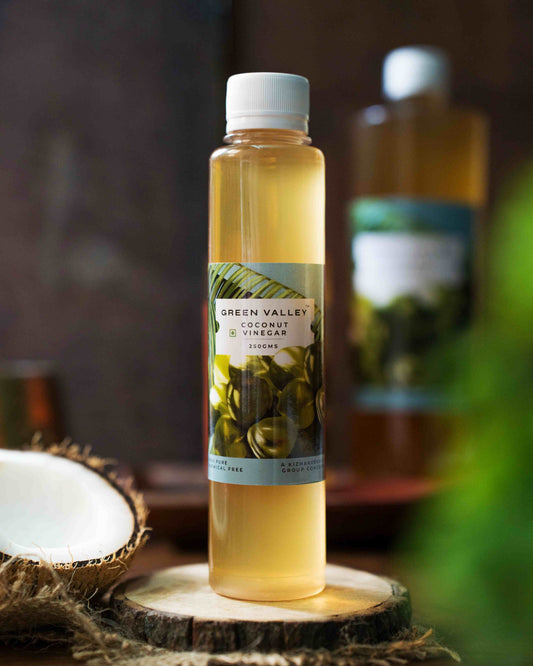
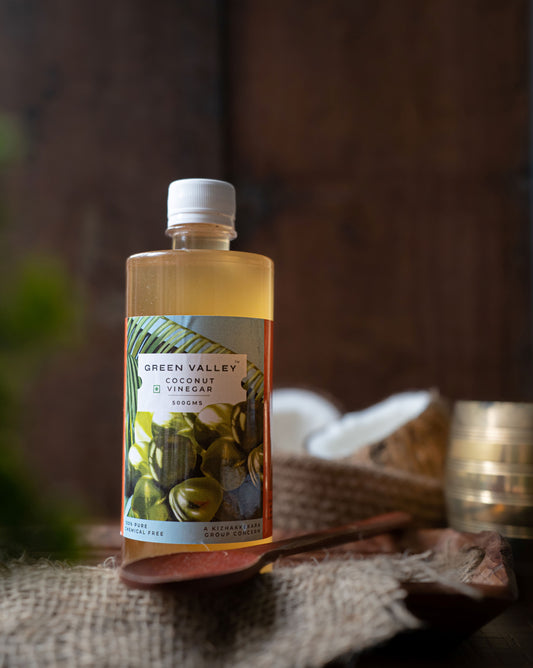
Coconut vinegar is one example of a vinegar made from a coconut-derived source. Its flavour can vary depending on the raw material, fermentation process, and production method.
What is synthetic vinegar?
Synthetic vinegar is different.
Under FSSAI's food standards, synthetic vinegar is vinegar prepared from acetic acid, with or without caramel and spices. It must meet specified requirements, including a minimum acidity level, and must not contain sulphuric acid or other mineral acids. It must also be clearly labelled "SYNTHETIC - PREPARED FROM ACETIC ACID."
The word "synthetic" can sound alarming, but it does not automatically mean that a food is unsafe. Food safety depends on the ingredients, concentration, manufacturing process, contaminants, and compliance with applicable food standards. FSSAI is responsible for setting and enforcing science-based food safety standards in India.
Is synthetic vinegar safe to eat?
A properly manufactured, compliant food product is different from an unregulated or improperly prepared product. Acetic acid itself is a familiar food ingredient. The WHO/FAO Joint Expert Committee on Food Additives (JECFA) has evaluated acetic acid and found no safety concern at the assessed levels of use as a flavouring agent.
The important point is to buy vinegar from a reputable manufacturer and check the label.
If you are purchasing synthetic vinegar, look for:
- FSSAI-compliant labelling
- Clearly listed ingredients
- Appropriate acidity information
- Sealed, food-grade packaging
- A valid best-before date
- A reputable manufacturer
So, what's different about coconut vinegar?
Coconut vinegar belongs to a different category because its identity comes from its raw material and production process. Depending on the product, coconut vinegar can be produced through fermentation of coconut-derived liquids. Fermentation can create a more complex flavour profile than simply diluting acetic acid to create acidity. This can make coconut vinegar particularly interesting for cooking.
It may have a mildly tangy, rounded flavour that works well in:
- Curries
- Pickles
- Salad dressings
- Marinades
- Sauces
- Soups
- Chutneys
The flavour profile is one of the biggest practical differences between a fermented vinegar and a straightforward acetic-acid-based vinegar.
Is natural vinegar healthier?
This is where it is important not to confuse natural with automatically healthier.
Fermented vinegar may contain compounds derived from its original raw material and fermentation process. Natural vinegar may contain a higher nutritional profile and significant flavour and aroma. However, that does not mean every fermented vinegar provides significant nutritional or therapeutic benefits.
Vinegar is primarily a culinary ingredient used to provide acidity and flavour.
Coconut vinegar for everyday cooking
Coconut vinegar can be particularly useful when you want acidity without making a dish taste overwhelmingly sharp. Try adding a small amount to:
Curries: A splash of coconut vinegar can provide acidity and help balance rich coconut-based gravies.
Pickles: Acidity is an important component of many pickling preparations. Always follow a tested recipe and appropriate food-safety practices when preserving food.
Salads: Combine coconut vinegar with oil, salt, pepper, herbs, and a little sweetness for a simple dressing.
Marinades: The acidity can add brightness to marinades for vegetables, meat, or seafood while helping create a balanced flavour.
Synthetic vinegar vs Coconut vinegar
|
Feature |
Synthetic Vinegar |
Coconut Vinegar |
|
Main source |
Acetic acid |
Coconut-derived raw material like coconut sap or coconut water |
|
Production |
Prepared using acetic acid |
Through fermentation |
|
Flavour |
Usually straightforward and sharp |
Can have a more complex, coconuty flavour with mild sweetness |
|
Main culinary role |
Acidity |
Acidity + distinctive flavour |
|
Best for |
General-purpose cooking |
Curries, pickles, dressings and marinades |
The choice ultimately comes down to what you want from the ingredient.
If you simply need acidity, synthetic vinegar can serve that purpose. If you want a fermented vinegar with a distinctive coconut-derived character, coconut vinegar offers something different.
Final Thoughts
The word "synthetic" can make an ingredient sound suspicious, but food production is more complicated than the labels suggest. In India, synthetic vinegar is a recognised food category with defined standards, while brewed vinegar is produced through fermentation.
Coconut vinegar offers another option, particularly for people who enjoy fermented ingredients and want a distinctive vinegar for cooking.
Ultimately, the best vinegar is the one that suits your recipe, comes from a trustworthy source, and fits the flavour you're trying to create. Sometimes the smallest splash in the pan is doing the heavy lifting.