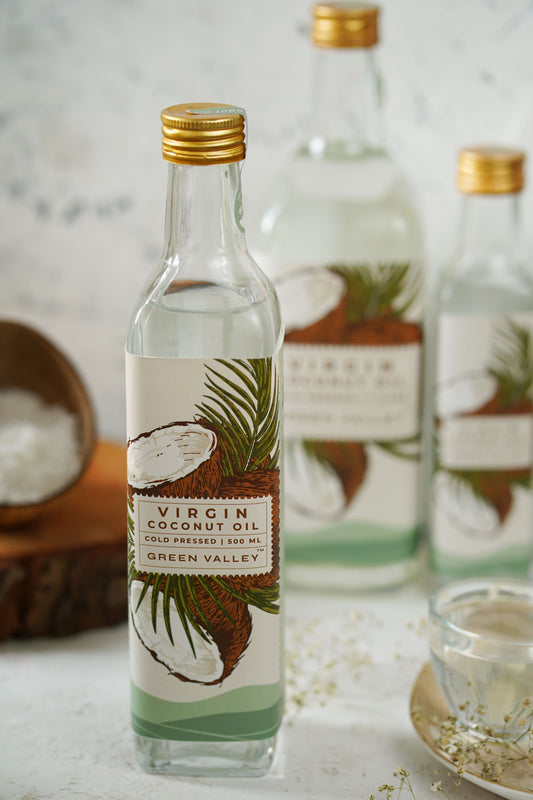

If you’ve ever opened a jar of coconut oil on a winter morning and found it stubbornly solid, you’ve probably thought, “Wait, is this fat or oil?” Then, come summer, the same jar turns liquid again, confusing everyone in your kitchen, including the coconut.
So, what’s going on? Is coconut fat different from coconut oil, or are they simply the same thing in two different moods?
The Short Answer: They’re Essentially The Same Thing
Yes, really. Coconut fat and coconut oil are the same substance; the only difference lies in the temperature.
- At temperatures below 24°C (76°F), coconut oil solidifies and becomes thick, creamy, and white; this is what people often call coconut fat.
-
At warmer temperatures, it melts into a clear, liquid oil, that’s your coconut oil.
So, whether you’re scooping it out like butter or pouring it like olive oil, it’s the same product, just wearing a different outfit depending on the weather.
But of course, there’s more to the story than a simple state change.
The Science Behind Coconut Fat (And Oil)
Coconut oil is made up of about 90% saturated fat, which is higher than most other plant-based oils.
Now, before your brain screams “unhealthy!”, take a deep breath. These saturated fats are mostly medium-chain triglycerides (MCTs), the kind your body loves to use for energy rather than storing as fat.
Here’s what that means for its texture:
- Saturated fats solidify easily at room temperature.
-
Unsaturated fats (like those in olive or sunflower oil) stay liquid.
That’s why coconut oil turns solid; it’s simply the chemical structure reacting to cool air. The composition remains the same.
When your coconut oil turns white and thick, it’s often called coconut fat or coconut butter.
In this form, it’s:
-
Rich, dense, and creamy
-
Perfect for baking, spreading, or moisturising
-
Shelf-stable for months without refrigeration
You’ll notice that virgin coconut oil, especially the cold-pressed kind, smells and tastes slightly sweet, that’s because it’s made from fresh coconut meat, not dried copra.
So if you’re spreading a spoonful of solid coconut “fat” on toast, you’re essentially eating the same healthy, unrefined virgin coconut oil that melts in your pan.
Once the temperature rises, that same white fat turns into clear, runny oil, smooth, silky, and ready for cooking.
Liquid coconut oil is versatile. You can use it to:
-
Fry, sauté, or bake
-
Add to smoothies or coffee
-
Massage into your skin and hair
-
Even oil-pulling for oral hygiene (yes, the ancient trick still works!)
And because it stays stable at high temperatures, coconut oil doesn’t oxidise or break down easily, a major win for your health and your cookware alike.
Nutrition: No Difference, Just a Change in Texture
Whether solid or liquid, the nutritional profile remains identical.
Here’s a quick snapshot (per tablespoon of virgin coconut oil/fat):
-
Calories: ~120
-
Fat: 14g
-
Saturated fat: ~12g
-
Monounsaturated: ~1g
-
Polyunsaturated: ~0.5g
-
Saturated fat: ~12g
-
Cholesterol: 0mg
-
Carbohydrates, Protein, Sugar: 0
So if you’re wondering whether coconut fat is “heavier” or “richer” than coconut oil, the answer is no. The calorie count doesn’t change with texture; only the consistency does.
Cooking And Beauty: When To Use Each
Though they’re nutritionally identical, each form has its ideal use.
1. When It’s Solid (Coconut Fat):
Use it when you want a rich, creamy texture.
-
Great for baking (cookies, cakes, brownies)
-
Perfect as a dairy-free butter substitute
-
Fantastic for skin care (moisturisers, lip balms, body butters)
-
Works beautifully as a deep-conditioning hair mask
2. When It’s Liquid (Coconut Oil):
Use it for all things that need pourable fat.
-
Ideal for frying or sautéing
-
Excellent for oil pulling or salad dressings
-
Great for massages (less messy than the solid form)
-
Wonderful as a makeup remover or cleansing oil
A Quick Note On “Fractionated” Coconut Oil
You might’ve seen “fractionated coconut oil” in stores - this version stays liquid all year round, even in cold weather.
That’s because it’s been processed to remove long-chain fatty acids and lauric acid that have a higher melting point, leaving behind only the MCTs (like caprylic and capric acids).
This makes it:
-
Lighter and less greasy
-
Shelf-stable
-
Odorless
It’s excellent for cosmetic use and massage oils, but for cooking, always go for cold-pressed virgin coconut oil instead; that’s where the nutrients live.
The Final Word
So, what’s the real difference between coconut fat and coconut oil?
Just the temperature.
Below 24°C, you have fat.
Above 24°C, you have oil.
Same calories, same nutrients, same delicious, healthy benefits.