
Virgin coconut oil is often associated with metabolism and weight management. You may have seen claims that it is "thermogenic," meaning it could increase the amount of energy your body uses after eating.
There is some scientific basis behind this idea, but the reality is more nuanced. Virgin coconut oil contains a high proportion of medium-chain fatty acids, which are metabolised differently from many other dietary fats. However, this does not mean that adding coconut oil to your diet will automatically increase fat burning or lead to weight loss.
Let's look at what thermogenesis actually means and what research tells us about coconut oil.
What does thermogenic mean?
Thermogenesis is the process through which your body produces heat. It requires energy, so thermogenesis contributes to the number of calories your body uses throughout the day.
Eating food itself requires some energy to digest, absorb, and process nutrients. This is known as the thermic effect of food.
Different nutrients have different thermic effects. Protein, for example, generally requires more energy to process than dietary fat.
Certain types of fat, particularly medium-chain triglycerides (MCTs), have also been studied for their potential effects on energy expenditure.
Why is coconut oil associated with thermogenesis?
The connection comes largely from the fatty acids found in coconut oil.
Coconut oil contains a substantial amount of lauric acid, along with smaller amounts of caprylic and capric acids. These are shorter-chain fatty acids than many of the fats found in foods such as butter and other animal fats.
Some medium-chain fats are rapidly absorbed and transported to the liver, where they can be used for energy.
This difference in metabolism has led researchers to investigate whether these fats increase energy expenditure or thermogenesis.
Does coconut oil actually increase metabolism?
Research on MCTs suggests that they may produce a modest increase in energy expenditure compared with some longer-chain fats.
However, there is an important distinction between pure MCT oil and ordinary coconut oil.
Coconut oil is not the same thing as commercially produced MCT oil. Most of the fat in coconut oil is made up of lauric acid, which behaves differently in the body from the shorter-chain MCTs commonly used in research.
Therefore, findings from studies using concentrated MCT oil should not automatically be applied to virgin coconut oil.
Can virgin coconut oil help with weight loss?
This is where marketing claims often get ahead of the evidence.
Some studies have investigated coconut oil and changes in body weight, waist circumference, or body composition. Results have been mixed, and many studies have been relatively small or short-term.
Even if a particular type of fat slightly increases energy expenditure, that doesn't necessarily translate into meaningful long-term weight loss.
Coconut oil is also energy-dense. One tablespoon contains roughly 120 calories, so adding it to your diet without accounting for those calories could increase total energy intake.
Weight management depends on many factors, including overall calorie intake, dietary composition, physical activity, sleep, and individual metabolism.
Does virgin coconut oil "burn fat"?
Not in the way the phrase is often used online.
Your body is constantly using and storing energy from different sources. Eating a particular food does not simply instruct your body to burn stored body fat.
While certain fatty acids may influence how energy is metabolised, this is very different from demonstrating that virgin coconut oil causes significant body-fat loss.
Claims that coconut oil "melts belly fat" or dramatically accelerates metabolism should therefore be treated cautiously.
How is virgin coconut oil useful?
Absolutely. Its value doesn't depend completely on it being a weight-loss food.
Virgin coconut oil is a versatile cooking ingredient with a distinctive flavour and naturally stable fat composition. It can be used in:
- South Indian cooking
- Sautéing vegetables
- Baking
- Roasting
- Curries
- Homemade snacks and granola
Its natural coconut aroma can also complement recipes where other cooking oils may taste neutral. The key is to use an appropriate quantity rather than treating it as a calorie-free health product.
Virgin coconut oil vs MCT oil
These products are sometimes confused because both contain medium-chain fatty acids.
|
Virgin Coconut Oil |
MCT Oil |
|
|
Source |
Coconut |
Usually coconut or palm-derived |
|
Processing |
Minimally processed varieties available |
Highly refined and concentrated |
|
Main fatty acid |
Lauric acid |
Primarily caprylic/capric acids |
|
Flavour |
Natural coconut flavour |
Usually neutral |
|
Common use |
Cooking and food |
Supplements and specialised dietary use |
Because their fatty acid compositions differ, research on MCT oil should not automatically be used to make claims about virgin coconut oil.
Choosing a good virgin coconut oil
If you want to include coconut oil in your diet, focus first on quality and intended use rather than promises about metabolism.
Look for:
- Fresh coconut as the raw material
- Minimal processing
- Cold-pressed extraction where applicable
- No unnecessary additives
- Clear manufacturing and best-before information
- Hygienic packaging
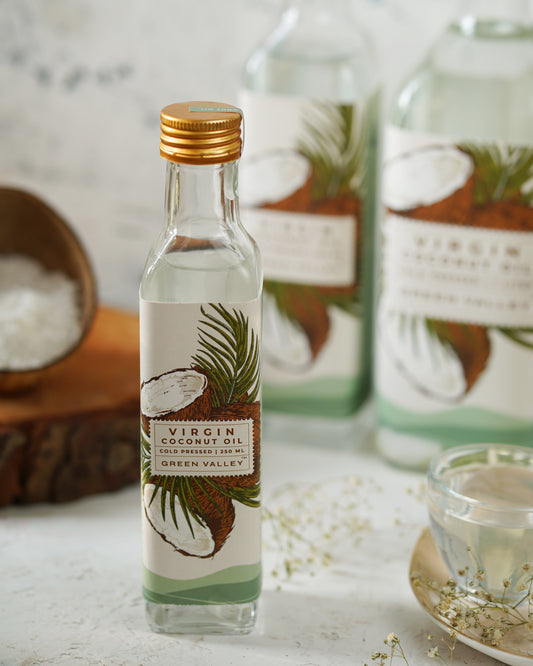
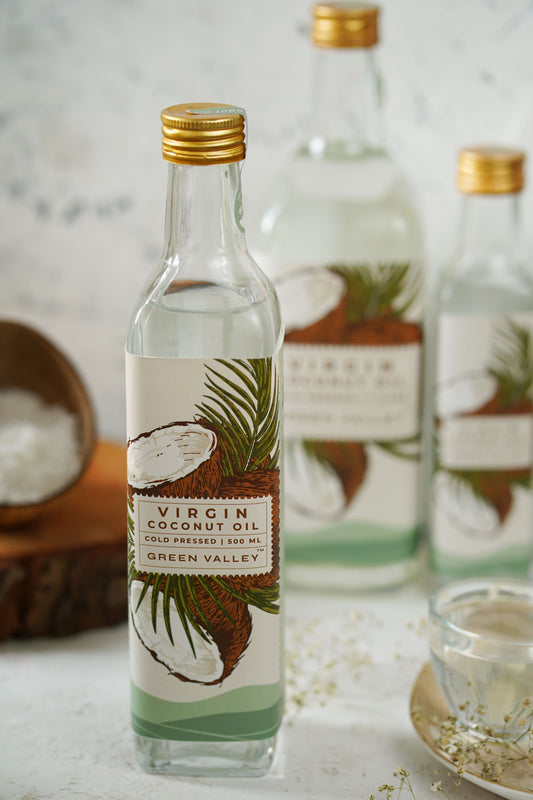
Green Valley Virgin Coconut Oil is cold-pressed from fresh coconuts without the use of chemicals. Its natural coconut aroma and flavour make it suitable for everyday cooking and other household uses.
Final thoughts
Virgin coconut oil has a fascinating relationship with metabolism because of its fatty acid composition. Research suggests that some medium-chain fats can influence energy expenditure, but the evidence does not support treating virgin coconut oil as a metabolism-boosting or fat-burning solution.
Enjoy it for what it is: a versatile, minimally processed cooking oil that can bring flavour and variety to your meals. When it comes to weight management, the bigger picture matters considerably more than any single ingredient.