
Few debates in the cooking oil world spark as much confusion as the one between coconut oil and sunflower oil. One is often praised as a natural superfood. The other is a common household staple found in kitchens around the world. Both come from plants, both provide fat for cooking, and both have supporters who claim theirs is the healthier choice.
But when you step back and look at the science, the real answer is more balanced. Neither oil is universally “better.” Each has a different nutritional profile and performs differently in cooking.
Understanding those differences can help you decide which oil works best for your needs.
The Basic Difference Between The Two Oils
The biggest distinction between coconut oil and sunflower oil lies in the type of fat they contain.
Coconut oil is made up mostly of saturated fat, while sunflower oil is composed largely of unsaturated fats.
A typical fatty acid breakdown looks like this:
Coconut oil
- ~90% saturated fat
- ~6% monounsaturated fat
- ~2% polyunsaturated fat
Sunflower oil
- ~10–12% saturated fat
- ~20–30% monounsaturated fat
- ~55–70% polyunsaturated fat
These differences affect everything from how the oils behave in the body to how they perform under heat.
How Coconut Oil Behaves In The Body
Coconut oil’s fat content is dominated by medium-chain fatty acids, particularly lauric acid. These fats are metabolised differently from long-chain fatty acids found in most cooking oils.
Medium-chain fats are absorbed quickly and transported to the liver, where they can be used for energy more rapidly. Because of this, coconut oil has become popular in low-carbohydrate and ketogenic diets.
However, coconut oil’s very high saturated fat content has also raised concerns among health authorities. Many nutrition organisations recommend limiting saturated fat intake because it can increase LDL cholesterol, which is associated with a higher risk of cardiovascular disease.
Research shows coconut oil can raise both LDL cholesterol and HDL (“good”) cholesterol. The overall impact on heart health is still debated, which is why many experts advise moderation.
How Sunflower Oil Behaves In The Body
Sunflower oil has a very different nutritional profile. It is rich in polyunsaturated fatty acids, particularly linoleic acid, an omega-6 fatty acid.
Polyunsaturated fats are often considered heart-healthy because they can help reduce LDL cholesterol levels when used in place of saturated fats.
Sunflower oil is also a good source of vitamin E, a fat-soluble antioxidant that helps protect cells from oxidative damage.
Because of these properties, many nutrition guidelines recommend replacing saturated fats with polyunsaturated fats such as those found in sunflower oil.
However, sunflower oil also has its own considerations. Diets that are excessively high in omega-6 fatty acids without enough omega-3 fatty acids may contribute to inflammatory processes in the body. The balance between these fats is important.
How They Perform In Cooking
Another major difference between coconut oil and sunflower oil is how they behave when heated.
Coconut Oil and Heat
Because it contains mostly saturated fat, coconut oil is relatively stable at moderate cooking temperatures. Saturated fats have fewer chemical bonds that can break down during heating.
Virgin coconut oil typically has a smoke point around 175°C, while refined coconut oil can reach 200–230°C.
This stability makes coconut oil suitable for sautéing, baking, and moderate frying.
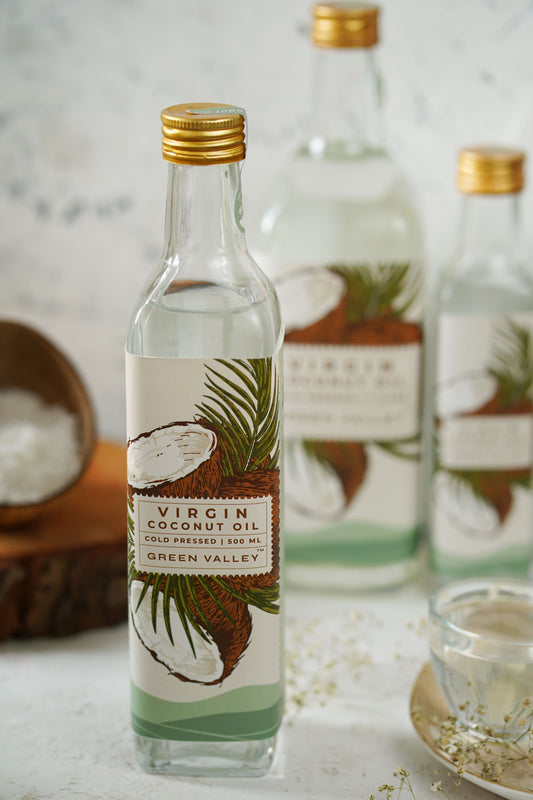
However, cold-pressed coconut oil has a noticeable coconut flavour, which may not suit every recipe.
Sunflower Oil and Heat
Sunflower oil generally has a higher smoke point, often around 225°C or higher, depending on the variety. This makes it well-suited for high-heat cooking methods such as deep frying.
However, because it contains more polyunsaturated fats, sunflower oil can be more prone to oxidation during prolonged heating. When oils rich in polyunsaturated fats are repeatedly overheated, they may form degradation compounds.
Using fresh oil and avoiding repeated reheating helps reduce this risk.
Flavour and Culinary Uses
Another difference between the two oils is flavour.
Coconut oil has a mild but noticeable coconut taste, particularly when it is unrefined or cold-pressed. This flavour works well in certain dishes such as baked goods, curries, and tropical recipes.
Sunflower oil, on the other hand, is generally neutral in flavour. This makes it suitable for a wide range of dishes where the oil should not influence taste.
Because of its neutrality, sunflower oil is commonly used in commercial cooking and packaged foods.
Which Oil Is More Versatile?
From a purely culinary perspective, sunflower oil is often considered more versatile because of its neutral taste and higher smoke point.
Coconut oil, while useful, is better suited to specific dishes where its flavour complements the recipe.
From a nutritional standpoint, the answer depends on dietary context. Sunflower oil provides more polyunsaturated fats and vitamin E, while coconut oil offers medium-chain fatty acids that are metabolised differently.
The Role of Moderation
Rather than choosing one oil exclusively, many nutrition experts suggest using a variety of fats in cooking.
Different oils contribute different fatty acids and nutrients to the diet. Using a mix of oils can help create a more balanced intake of saturated, monounsaturated, and polyunsaturated fats.
For example, some people use coconut oil for certain cooking methods or baking, while using sunflower oil for high-heat frying.
The Final Verdict
So, is coconut oil better than sunflower oil?
Not universally. Coconut oil and sunflower oil serve different purposes.
Coconut oil is rich in saturated fats and relatively stable during moderate heat cooking. Sunflower oil is rich in polyunsaturated fats and contains vitamin E, making it nutritionally valuable and suitable for high-temperature cooking.
In most cases, the healthiest approach is not choosing one over the other but using each oil appropriately and in moderation within a balanced diet.
Sometimes the best answer in nutrition is not choosing sides but understanding the strengths of both.