
Virgin coconut oil has become a pantry staple for many households thanks to its versatility in cooking, baking, skincare, and hair care. But like any natural product, it doesn't last forever. If you've found an old jar in your kitchen or are wondering how to store a freshly opened bottle, understanding its shelf life can help you enjoy its quality for longer.
The good news is that virgin coconut oil has a naturally long shelf life due to its high saturated fat content and low moisture. However, proper storage plays an important role in maintaining its freshness, aroma, and nutritional value.
What is the shelf life of virgin coconut oil?
A high-quality virgin coconut oil typically lasts 9 to 15 months from the date of manufacture when stored correctly. Some products may remain usable beyond this period, but the quality, aroma, and taste may gradually decline.
Unlike many cooking oils that are rich in polyunsaturated fats and oxidise quickly, virgin coconut oil contains mostly medium-chain saturated fats, making it naturally more resistant to rancidity. Always check the best-before date on the packaging, as storage conditions and manufacturing methods can influence shelf life.
Does opening the bottle reduce its shelf life?
Opening a bottle doesn't immediately spoil the oil, but it does expose it to air, moisture, and contaminants. With proper handling, an opened bottle can usually remain fresh until its best-before date.
To preserve quality:
- Close the lid tightly after every use.
- Use a clean, dry spoon instead of dipping wet utensils into the jar.
- Avoid introducing food particles or water into the oil.
- Keep the container away from direct sunlight and heat.
These simple habits help prevent contamination and preserve the oil's natural aroma and flavour.
How should virgin coconut oil be stored?
Proper storage is one of the easiest ways to extend the life of your virgin coconut oil.
For best results:
- Store it in a cool, dry place.
- Keep it away from direct sunlight.
- Avoid placing it near the stove or oven where temperatures fluctuate frequently.
- Always seal the container tightly after use.
There's no need to refrigerate virgin coconut oil in most climates. In fact, refrigeration causes the oil to solidify, although this does not affect its quality. At room temperature, coconut oil may appear either solid or liquid depending on the surrounding temperature. This natural change in texture is completely normal.
How can you tell if virgin coconut oil has gone bad?
Virgin coconut oil doesn't usually spoil suddenly. Instead, it gradually develops signs that indicate it is no longer at its best.
Look out for these indicators:
1. An unpleasant smell - Fresh virgin coconut oil has a mild, pleasant coconut aroma. If it smells sour, stale, or paint-like, it may have become rancid.
2. Discoloured appearance - Virgin coconut oil is typically clear when liquid and white when solid. If you notice unusual yellowing, dark spots, or cloudiness unrelated to temperature changes, inspect it carefully before use.
3. Off taste - If the oil tastes bitter, sour, or noticeably different from its usual mild flavour, it's best to discard it.
4. Visible contamination - If you notice mould, food particles, or signs of moisture inside the container, it's safer not to consume the oil.
Why does virgin coconut oil last longer than many other oils?
One of the reasons virgin coconut oil enjoys such a long shelf life is its unique fatty acid composition.
Unlike oils that contain large amounts of polyunsaturated fats, virgin coconut oil is predominantly made up of saturated fats, including medium-chain triglycerides (MCTs). These fats are naturally more stable and less prone to oxidation, allowing the oil to retain its quality for a longer period when stored properly.
The extraction method also matters. High-quality cold-pressed virgin coconut oil is minimally processed, helping preserve its natural compounds and fresh coconut aroma.
Does packaging make a difference?
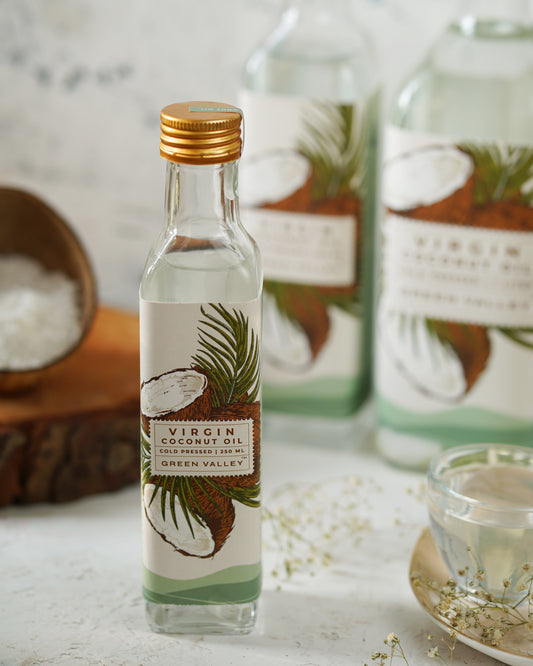
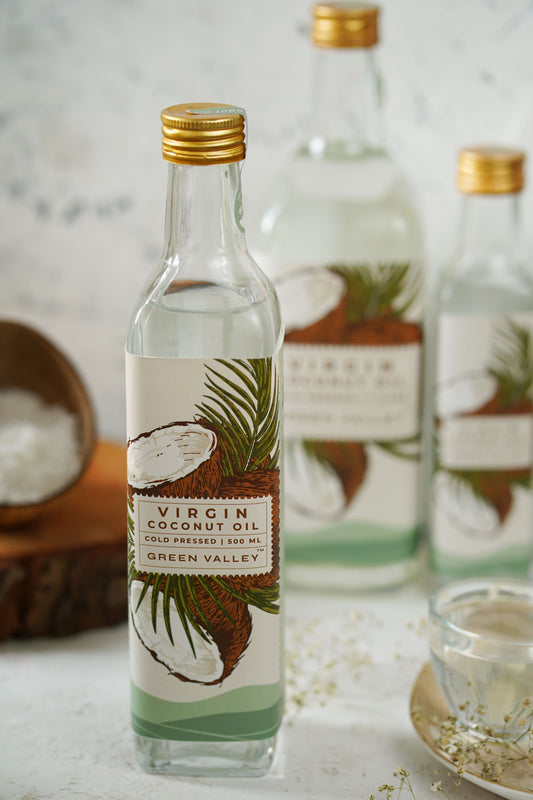
Yes. Packaging plays an important role in protecting the oil from light, air, and contamination. Glass bottles and food-grade, airtight containers help preserve freshness better than containers that allow excessive exposure to light or air.
When purchasing virgin coconut oil, choose products that are:
- Cold pressed
- Minimally processed
- Properly sealed
- Clearly labelled with manufacturing and best-before dates
Choosing a quality virgin coconut oil
The quality of the oil you buy has a direct impact on how well it retains its freshness over time.
A premium virgin coconut oil should have:
- A clean, fresh coconut aroma
- No artificial additives or preservatives
- Minimal processing
- Hygienic packaging
- Clear storage instructions
Final thoughts
Virgin coconut oil is naturally one of the most stable edible oils available, making it an excellent pantry essential. With proper storage and handling, it can maintain its freshness for up to two years while retaining its characteristic aroma and quality.
Before using any bottle, simply check its smell, appearance, and taste. A little care goes a long way in ensuring you get the best from every drop.
If you're looking for a high-quality cold-pressed Virgin Coconut Oil, choosing a product made from fresh coconuts and processed with minimal intervention can help ensure freshness, purity, and consistent quality.