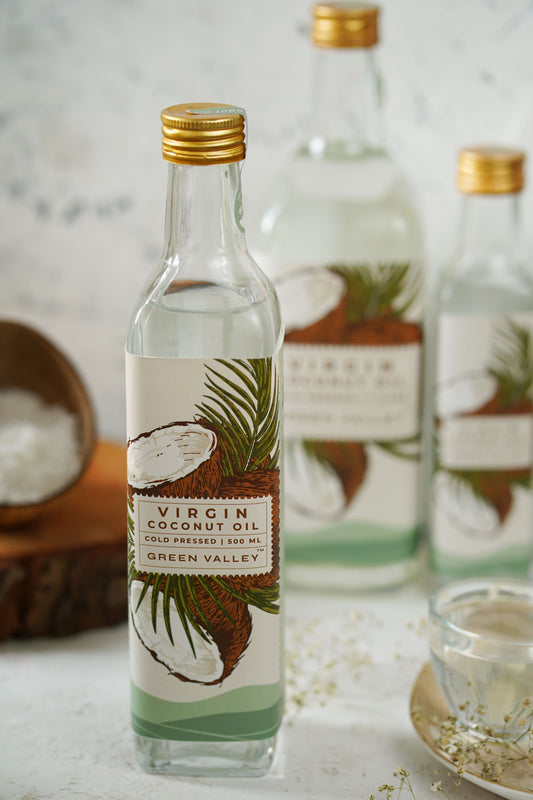

Heart health. A topic so serious that even a whiff of the word cholesterol can send people scrambling to check their pulse and rethink their breakfast choices.
But in the rush to stay healthy, we’ve also collected a pile of myths that are, let’s be honest, long overdue for a reality check. Today, we’re tackling three of the most common heart-health myths, separating science from scare tactics, and showing you where coconut oil actually fits in all this.
Myth #1: “All Fats Are Bad For The Heart”
Let’s start with the myth that refuses to die. For decades, fats have been painted as villains of the food world. “Fat makes you fat,” we were told. “Fat clogs arteries.” “Fat equals heart disease.”
But here’s the truth: not all fats are created equal.
There are bad fats, like trans fats and heavily processed oils, that can raise your LDL (the “bad” cholesterol). And then there are good fats, like monounsaturated and medium-chain fatty acids, that actually support heart health by improving HDL (the “good” cholesterol).
Now, coconut oil is special because it’s made up primarily of medium-chain triglycerides (MCTs). These MCTs are metabolised differently from long-chain fats, meaning they’re used for energy rather than storage.
What’s more, studies have shown that MCTs can increase HDL levels and maintain a healthy balance between HDL and LDL, a crucial factor in cardiovascular wellness.
So, while you shouldn’t dive into a pool of coconut oil, adding a spoonful or two to your meals won’t make your arteries beg for mercy. It might actually make them hum a happier tune.
Myth #2: “Coconut Oil Raises Cholesterol And Causes Heart Disease”
This one spread faster than a viral TikTok recipe.
The idea that coconut oil is “bad for the heart” came from its high saturated fat content, about 80-90%. Traditional wisdom said: “Saturated fats = clogged arteries.”
But hold your coconuts. Not all saturated fats behave the same way in the body.
The saturated fats in coconut oil are mostly MCTs, particularly lauric acid, which behaves more like an unsaturated fat when it comes to metabolism. Lauric acid has been found to raise HDL cholesterol more than LDL, thus improving your overall cholesterol ratio, a better indicator of heart health than LDL levels alone.
In fact, a 2020 review published in the Journal of Food Science and Technology concluded that moderate consumption of virgin coconut oil does not increase cardiovascular risk factors in healthy individuals.
It’s also worth noting that coconut oil contains antioxidants and polyphenols that may protect against inflammation - one of the key contributors to heart disease.
So the real villain? Not coconut oil. It’s the overprocessed junk oils - hydrogenated vegetable oils, palm oil blends, and deep-frying leftovers - that deserve the blame.
Myth #3: “Eating Heart-Healthy Means Avoiding Oils Altogether”
Somewhere along the way, “heart-healthy” got translated into “oil-free.” But newsflash - your heart needs fats.
Fats help the body absorb fat-soluble vitamins like A, D, E, and K, all of which are vital for maintaining a strong cardiovascular system. They also help produce hormones and maintain cell membrane integrity, which keeps your heart ticking smoothly.
Going completely fat-free can actually harm your metabolism and increase cravings (which, ironically, might lead you to binge on sugar or processed carbs, neither of which your heart appreciates).
The key isn’t to ditch oils - it’s to choose the right ones.
And that’s where coconut oil shines. Because it’s minimally processed, it retains natural antioxidants and lauric acid, which support healthy cholesterol balance and provide a steady source of clean energy.
So no, you don’t have to fear your frying pan. Just choose wisely what goes into it.
A Quick Note On Moderation
Before you grab a spoon and declare your eternal love for coconut oil, let’s bring in a voice of reason.
Even the healthiest fats should be consumed in moderation. Experts recommend no more than 1–2 tablespoons per day as part of a balanced diet. You can use it for sautéing veggies, baking, or even drizzling over roasted sweet potatoes for a tropical twist.
Remember, your heart doesn’t just need good fats; it also needs movement, hydration, and a few deep breaths away from stress.